

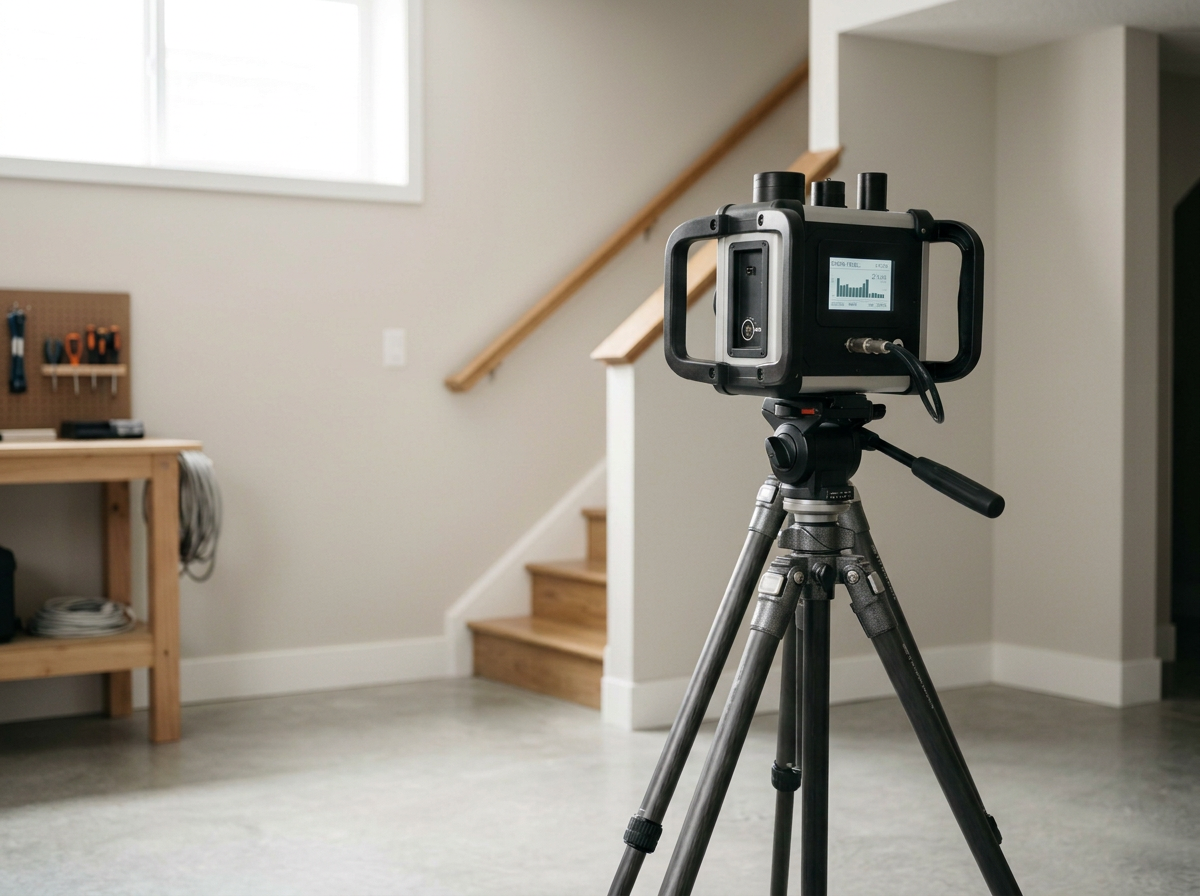
Radon Testing
Professional radon testing for a safe, healthier home.
What Is Radon?
Radon is a naturally occurring, colorless, odorless, and radioactive gas that forms as uranium in soil, rock, and groundwater breaks down. Because radon cannot be seen, smelled, or tasted, testing is the only way to know how much radon is present in a home.
Radon can enter a home through cracks and openings in the foundation, floors, walls, and around pipes and other construction joints. Once inside, it can accumulate to elevated levels, especially in lower levels of a home.
Why Is Radon a Concern?
Long-term exposure to elevated levels of radon can increase the risk of lung cancer. The risk generally increases as radon levels and the length of exposure increase.
The good news is that radon levels can be measured, and elevated levels can often be reduced with a properly designed and installed radon mitigation system.
Understanding Radon Levels
Radon is commonly measured in picocuries per liter (pCi/L). While there is no known level of radon exposure that carries zero risk, the following ranges can help homeowners understand their test results:
Below 2.0 pCi/L: Lower level of radon. While there is no completely risk-free level, this is generally considered a relatively low reading.
2.0–3.9 pCi/L: Radon is present at a measurable level. Consider taking steps to reduce exposure, particularly if levels are consistently in this range.
4.0 pCi/L or higher: This is the EPA action level. The EPA recommends taking action to reduce radon levels when a home's long-term average is at or above 4.0 pCi/L.
10 pCi/L or higher: A significantly elevated level that warrants prompt attention and evaluation for radon mitigation.
It's important to remember that a single radon test represents conditions during the testing period (48 hours). Radon levels can fluctuate over time due to weather, ventilation, soil conditions, and other factors. Follow-up testing may be recommended depending on the initial result.
Should You Test Your Home for Radon?
Yes. Any home can have elevated radon levels, regardless of its age, construction type, or whether it has a basement. Even neighboring homes can have significantly different radon concentrations.
Because radon cannot be detected without specialized equipment, testing is the only way to determine the radon level in a home.
As part of a home inspection, a radon test can provide valuable information about potential radon exposure and help homeowners make informed decisions about their property.
Know your home's radon level. Test today and take the first step toward understanding your home's indoor air quality.
*Note: Radon testing currently unavailable for Minnesota inspections. Stay tuned!